Showing posts with label horticulture. Show all posts

Wednesday, July 08, 2015

Pest of the month: The Pine Oribatid


During my residence at Fujikawa Kouka-en I was told of a pest mite regularly found on pine bonsai. With the help of my teacher I got hold of a specimen. Back in Sydney, armed with a microscope, thick books and the Internet, I managed to identify it as the Pine Oribatid (Diapterobates humeralis). It’s an arboreal mite that feeds on decaying plant tissues, fungi, algae, and lichens in coniferous forests. For what it’s worth it “cleans” the tree bark off fungi, algae, and lichens. It also feeds on silk filaments enveloping the eggs of woolly conifer aphids (see my blog post about a similar aphid here http://lomov.blogspot.com.au/2013/10/pest-of-month-asian-woolly-hackberry.html). By doing that it dislodges the eggs and exposes them to the elements and the natural predators such as ants and spiders. This means that the Pine Oribatid is not a pest, but one of the good guys!

Monday, July 06, 2015

Pest of the month: The Pine Moth


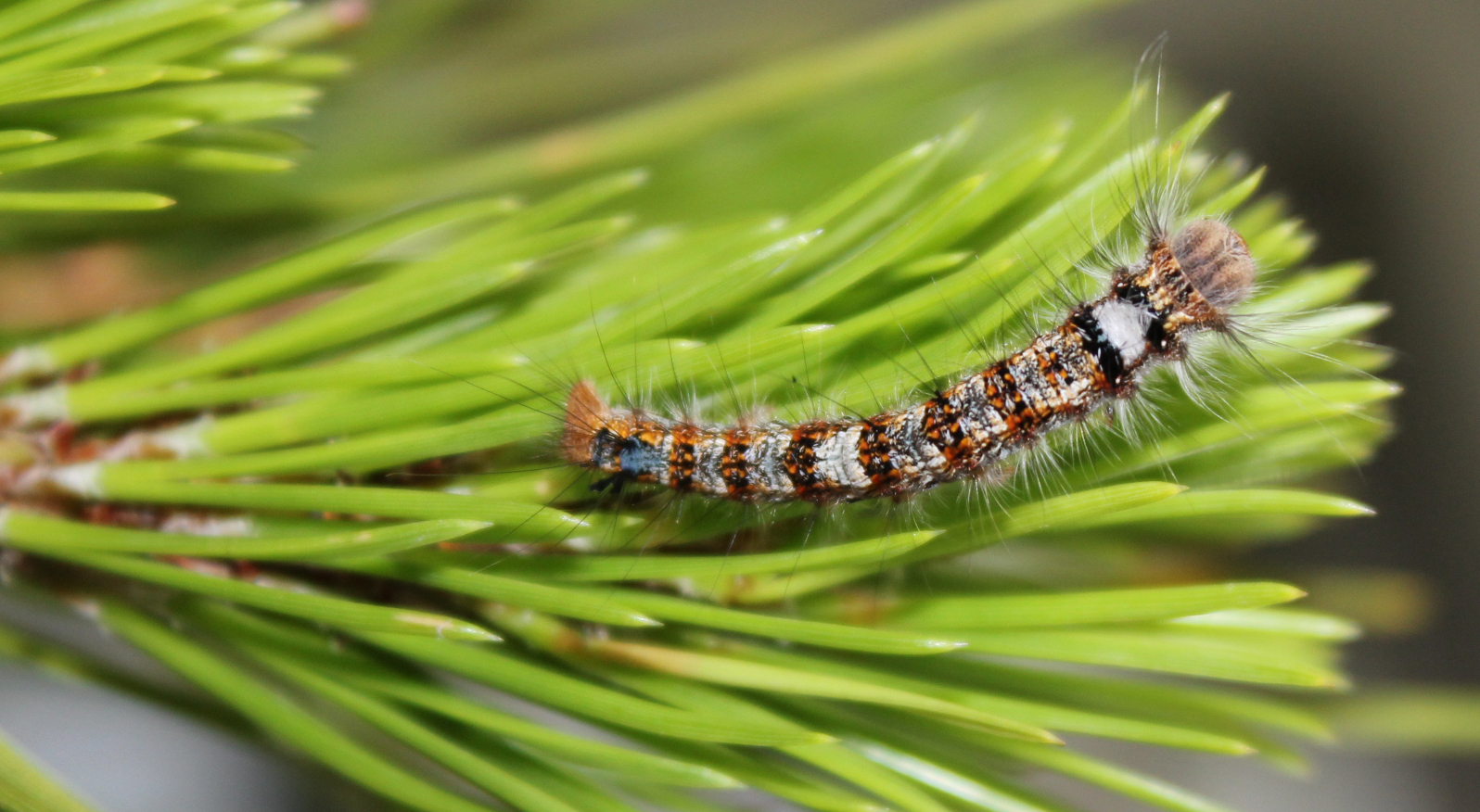
I spent the last month learning bonsai at the Fujikawa Kouka-en in Osaka. During that time, those who worked at the nursery kept spotting hairy caterpillars feeding on Japanese Black Pine needles (see the image above). I put one of them in a vial with alcohol to identify it later. Back in my Sydney lab, I set to the task. A copy of “Illustrated Insect Larvae of Japan” published in 1962 was just the book to solve my mystery. It happened to be a caterpillar of the Pine Moth (Denrolimus spectabilis) also known in Japan as matsugahera. Its caterpillars feed on pines, mainly Japanese Red Pine (Pinus densiflora) and Japanese Black Pine (P. thunbergii). Young caterpillars prefer needles of the current year, but older ones prefer one-year-old needles. Although this pest is not known to kill trees, it can seriously weaken a pine bonsai when it is de-candled and has all old needles removed. In Japan, it can complete a couple of life cycles per year, so caterpillars appear only once or twice a year. Australian bonsai growers can relax about the Pine Moth, because it is currently found only in China, Japan and Korea.

Incidentally, this pest is one of the main reasons why the Japanese tie little straw mats around pine tree trunks. They call these mats mushi taji, fuyugakoi or komomaki and I published a blog post about it a few years ago (you can read it here http://lomov.blogspot.com.au/2011/05/mushi-taji.html).

Wednesday, December 24, 2014

Bonsai production nursery in Shanghai


During my visit to China at the beginning of this year, I stumbled across a large bonsai production nursery on the outskirts of Shanghai. I haven’t noticed anything of quality or taste there, but the sheer scale of their production was impressive. Image ‘A’ below shows a raw of 17 hothouses. Images ‘B’ and ‘C’ show how some of them looked inside.

They also had a significant number of larger hothouses, which were not covered with plastic and images below show what was in them.

All plants there were just Podocarpuses, pines, maples and junipers. Images below show some close up shots of individual trees. Nothing special. 

Now I know where cheap bonsai come from.

Friday, July 11, 2014

Frost


I have been growing bonsai in the same area of Sydney for the past 7 years, but I’ve never seen my trees to be exposed to sub-zero temperatures. This morning I found frost on some of the leaves and ice in the drip trays. The lowest night temperature for my area was reported to be 6°C and at the time of taking the photos shown above the temperature was reported to be 18°C. A disparity of 20 degrees! No wonder everybody thinks there is global warming.

Saturday, July 16, 2011

Street trees of Tokyo

It has been one-and-a-half years since my last trip to Japan, but I still feel compelled to blog about it. Not sure if it is a good sign, but I am going to do it anyway.

When in Japan, you don’t have to be a horticulturist to notice that they spend a lot more time looking after their street trees. Some of them just stop you dead in your tracks. The photo above on the left shows an old plum tree featuring large areas of exposed wood on its trunk. The photo above on the right shows a painstakingly manicured Black Pine outside a private gate. Even trees looked after by the local government are impressive. Below are a few examples. The photo on the left shows bamboo used as road side planting. I am not sure what species it is, but most of them are ‘runners’ or ‘clumpers’ and will involve a bit of maintenance to keep them as they are on this picture. The photo in the center shows a pine trained into a pleasing shape, which also allows the passage of street cables. The photo on the right shows a deciduous tree, which has been carefully pruned every year to maintain a compact crown in one of the busy streets of Tokyo.


Friday, July 08, 2011

Gate-shading pine - Mon Kaburi


When I was staying in Ueno, Tokyo last year, I went for a stroll to explore the surrounds and was blown away by the density of temples in the area. There was practically a temple every fifty meters. Later, I learned that this relatively small area boasts 92 temples. Many of them are small though. In one of them I saw the most amazing gate-shading pine (mon kaburi). One long branch of this three stretched all the way from the temple to the front gate (photo 1) while the other long branch stretched across the entire front side of the temple (photo 2). Old branches of the pine were covered with moss and the tree trunk was ancient.

Sunday, May 29, 2011

The best of fall 2011

I was doing an autumn clean up in my garden and found a few treasures. On the image top to bottom left to right: oak, birch, gingko, maple.


Thursday, May 26, 2011

Mushi taji

When I visited Japan last year, I was puzzled by small straw mats tied around tree trunks (see the image above). Is this a horticultural technique? Is it a religious custom? Or is it just a garden ornament? I stumbled across the answer in a wonderful book on Japanese gardens by Motomi Oguchi. This straw mat is called mushi taji. It is put in autumn when insects descend from the canopy down the trunk to the ground for overwintering. Mushi taji tricks insects to overwinter in it and at the end of winter it is burnt. A more elaborate version of it, called fuyugakoi, is used in colder parts of Japan to protect the trees from frost and retain moisture in the soil, in addition to pest control. Fuyugakoi can be quite decorative as well.


Saturday, April 09, 2011

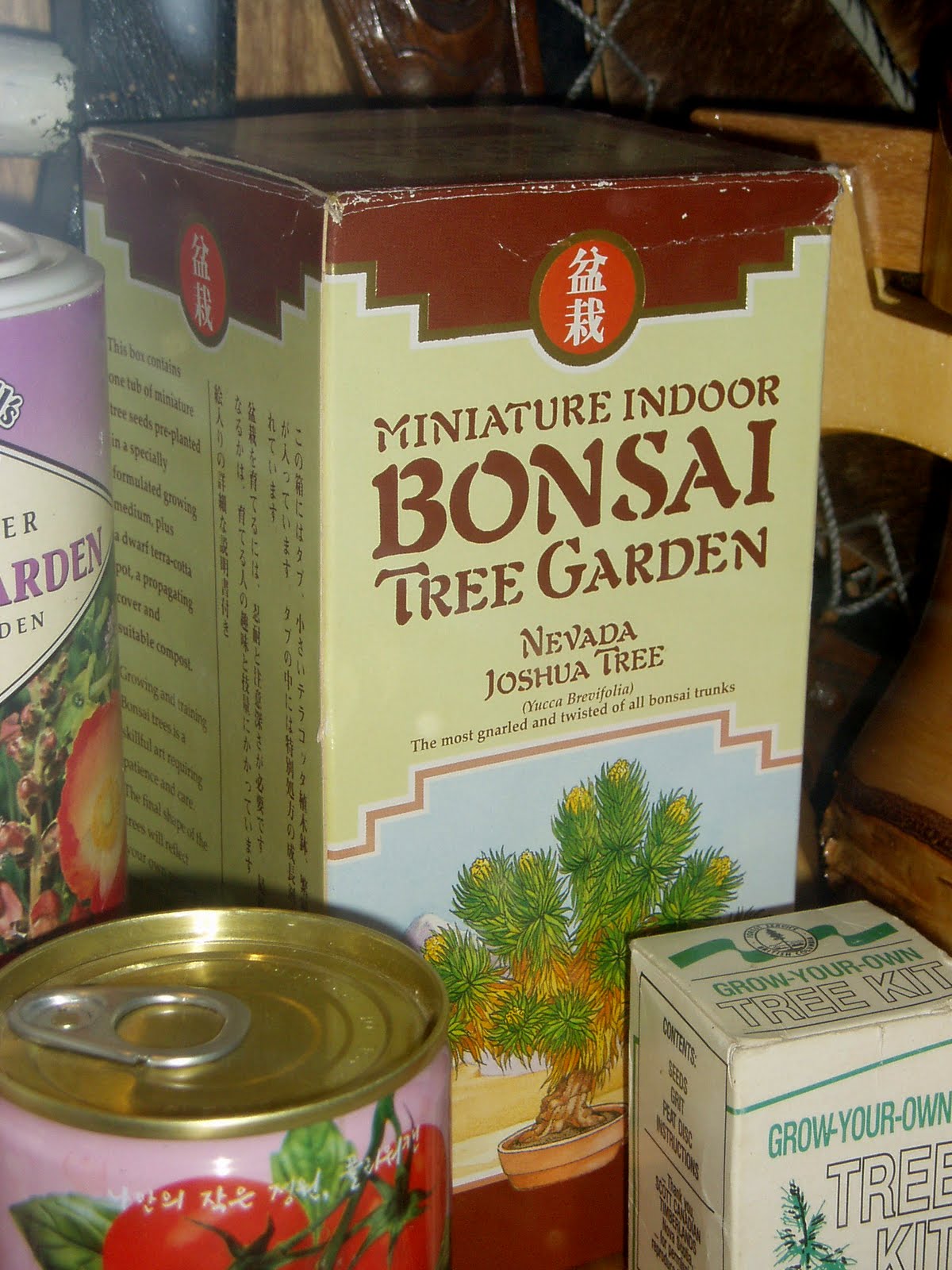
Worst possible introduction to Bonsai

I found it at last – the worst possible introduction to bonsai. It is an American product called “Miniature Indoor Bonsai Tree Garden”. I like it because it is wrong in so many different ways! It starts with a ridiculous name and then goes on to tells us that “This box contains one tub of miniature tree seeds pre-planted in a specifically formulated growing medium, plus a dwarf terracotta pot, a propagating cover and suitable compost.” So, that’s how it works!
...........................................................................................................


(MINIATURE TREE SEEDS) + (DWARF TERRACOTTA POT) = (MINIATURE INDOOR BONSAI TREE GARDEN)

Now that we are armed with the secret bonsai formula, how can we go wrong?

Sunday, April 25, 2010

Kencho-ji junipers, Kamakura


When I visited Kencho-ji temple in Kamakura, I was really impressed by magnificent juniper trees growing along the temple’s main alley. They looked like some sort of Chinese Juniper and one of them had a trunk about four meters in diameter (photo on the left). I took some photos, wandered about how old they are and forgot about them. Two months later I was reading about Kencho-ji and found that these junipers were actually planted by the founder of the temple Chinese Zen master Lan-hsi Tao-lung between 1253 and 1278 from seeds brought from China.

Tuesday, July 07, 2009

Ray Nesci's technique

I forgot to mention that at Peter Adams' workshop last week, Ray Nesci showed everyone an amazing technique. He forms a tree trunk out of moss and plants many small plants into it as branches. Plant roots eventually reach the soil at the base of the trunk, while the moss rots away leaving a thick and gnarly trunk formed by the roots. It's awesome!


Sunday, April 26, 2009

Genji Monogatari on autumn foliage

Day by day, autumn is making itself more and more apparent in my little garden. Cold nights almost completely stopped the growth of my bonsai. Recently, while reading Genji Monogatari I stumbled across an interesting remark made by one of the novel’s characters. It goes: “… Nothing is so beautiful as the brilliant dyes spread over the face of Nature, yet the red tints of autumn are often not dyed to a colour so deep as we desire, because of the early drying of the dew, so we say - such is the uncertain fate of this world.” I wonder whether dew really affects the colour of autumn foliage.

Sunday, August 24, 2008

Resurrection of Pink Serissa


At the end of last year, I got a lovely little Pink Serissa (Serissa foetida). I was just beginning to consider how to train it as bonsai (left picture), when my dog Bella ate it to the ground. The stump of the main stem soon rotted away and I lost all hope for the plant's survival, when suddenly a leaf bud sprouted from something that looked like a surface root. Look at this plant now (right picture)!