
Last June, I visited
Ginkaku-ji temple just like millions of people before me. Now, I am writing
about it just like thousands of people before me. Why? Because it makes me re-live
the experience, remember it better and learn some fascinating things. Things
that would’ve made me appreciate Ginkaku-ji better if I knew them when I was
there. I also do it in hope that I am not alone in my fascination.

To an uninitiated observer
Ginkaku-ji is a couple old quaint buildings with a cool Zen garden surrounded
by a beautiful parkland. To a student of bonsai and Japanese aesthetics there
is a little more to it. In the late 15th century Shogun Ashikaga Yoshimasa
built Ginkaku-ji as his retirement residence. He was following an example set
by his grandfather shogun Ashikaga Yoshimitsu who built Kinkaku-ji (Golden
Pavilion) for his retirement (here is my blog post about it http://lomov.blogspot.com.au/2015/10/kinkaku-ji-and-rikusho-no-matsu.html). However unlike his
grandpa, Yoshimasa was influenced by more simple aesthetics of Zen Buddhism.
Due to a chain of unfortunate events his “Silver Pavilion” (Kannon-den, images above) never received its
intended silver finish, which incidentally reflects a Zen principle called wabi-sabi (impermanent, imperfect,
incomplete).

Zen aesthetics are also evident in the design of the dry
garden (see images above). It's a simplified landscape. The sand mound (Kogetsudai) shown in the left image represents Mount Fuji, while raked
sand (Ginshadan) represents the sea.

The Ginshadan wave pattern is picked-up by other parts of
the temple which ties it all together (see images above).
In the annals of Japanese
cultural history the construction of Ginkaku-ji marks the beginning of Higashiyama
culture (Ginkaku-ji’s formal name is Higashiyama
Jishōji). One of the most significant aspects of this cultural development
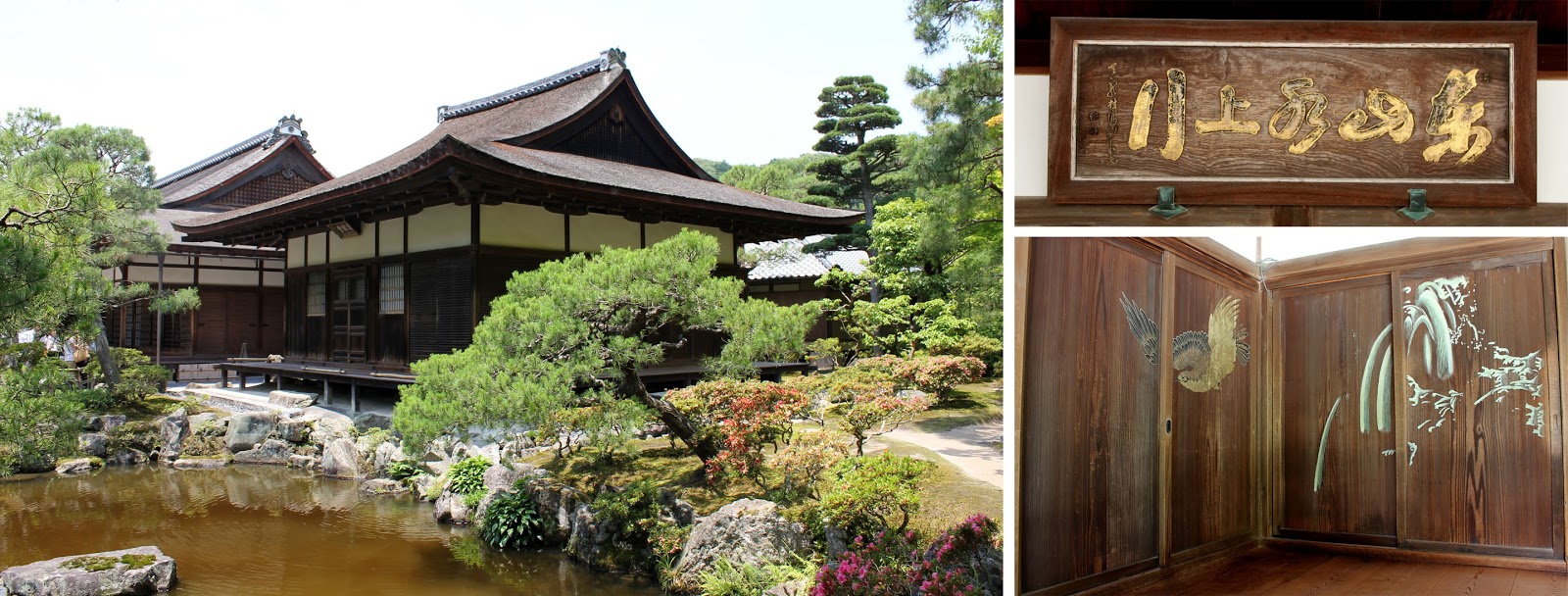
was Japanese tea ceremony together with many arts associated with it. The Tōgudō hall shown above enjoys a very special status in the history
of Japanese tea ceremony. It is the oldest existing Shoin style building in Japan and one of its two rooms is a
4.5-tatami-mat tea room called Dōjinsai.
This room is the earliest extant example of a Japanese tea room as it is known
today. Although Dōjinsai is executed
in Shoin style, it displays certain
features of the later and less formal Soan
style. Public is not allowed to see the interior of Tōgudō. The leftmost image below is another view of it from a slightly different angle.

The garden is beautiful any
way you look. The center image above shows the level of training and shaping received
by some of the trees in the garden. The rightmost image above shows an example
of Ginkaku-ji’s moss gardens. At first glance they look like a regular park,
but a closer look reveals that everything that supposed to be grass is actually
moss. Many different species of moss to be precise (see images below).

I conclude my post
with a few images showing scenery around Ginkaku-ji's pond. Visiting this place
is definitely my idea of fun.


